
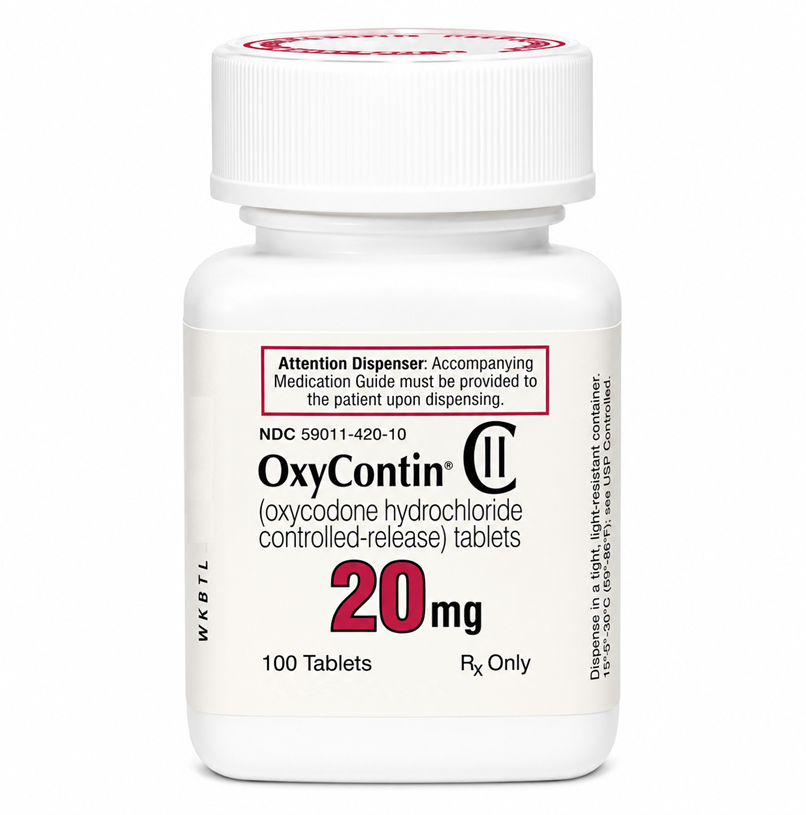
OxyContin 20 mg (Oxycodone Hydrochloride) Extended-Release Tablets
OxyContin 20 mg is an extended-release formulation of oxycodone hydrochloride, an opioid analgesic used for the management of severe, persistent pain that requires around-the-clock, long-term treatment when alternative therapies are inadequate. The extended-release tablet is designed to deliver oxycodone over an extended period and should be taken only as prescribed by a qualified healthcare professional.
Each film-coated, extended-release tablet is formulated with specialized abuse-deterrent physicochemical properties. When exposed to water, the tablet matrix exhibits hydrogelling properties that cause it to become highly viscous (gel-like) and resistant to crushing, breaking, or dissolving to discourage unauthorized routes of administration.
Indications of OxyContin 20 mg
OxyContin is indicated exclusively for the management of severe and persistent pain that requires daily, continuous, around-the-clock, long-term opioid treatment. It is only prescribed when alternative non-opioid or immediate-release opioid treatment options are inadequate, ineffective, or poorly tolerated.
Important Restriction: OxyContin is not indicated as an “as-needed” (prn) analgesic.
Mechanism and Kinetics
Active Ingredient: 20 mg of Oxycodone Hydrochloride (equivalent to 17.9 mg of oxycodone free base).
Delivery Profile: Designed for dual-phase, controlled delivery over 12 hours. An initial prompt release provides rapid onset, followed by a sustained release that maintains a stable therapeutic plasma concentration.
Administration: Must be swallowed whole with adequate water. Crushing, chewing, or breaking the tablet destroys the controlled-delivery mechanism and can lead to a rapid release of a potentially fatal dose.
Physical Characteristics
Appearance: Round, biconvex, pink film-coated tablets.
Imprints: Distinctly marked with “OC” on one side and “20” on the reverse side to ensure clear dosage verification.
Important Safety Information of OxyContin 20 mg
OxyContin exposes patients and users to serious risks of opioid addiction, abuse, misuse, life-threatening respiratory depression, and fatal overdose. Accidental ingestion by anyone, especially children, can result in death. Concomitant use of opioids with benzodiazepines or other central nervous system (CNS) depressants, including alcohol, may result in profound sedation, respiratory depression, coma, and death. Prescribers must evaluate each patient’s risk profile and adhere strictly to the FDA-mandated Risk Evaluation and Mitigation Strategy (REMS) protocol.



Leave a Reply